 Bibiserv
Intoday’s hyper-connected digital landscape, Software as a Service (SaaS) applications are prime targets for cyberattacks. From data breaches to insider threats, the security risks facing SaaS platforms have intensified alongside their growing adoption. As organisations prioritise agility and scalability, they must also embrace a foundational principle: Secure by Design.
“Secure by Design” is not a buzzword. It’s a disciplined approach to building software with security ingrained from the first line of code to deployment and beyond. DevSecOps — the convergence of development, security, and operations — is the methodology that makes this possible. By embedding security into every phase of the Software Development Lifecycle (SDLC), DevSecOps ensures that SaaS applications are resilient, compliant, and trustworthy by default.
Section 1: Understanding DevSecOps and Its Importance
DevSecOps integrates security practices into the DevOps pipeline, ensuring that security is not a bottleneck but a continuous, automated, and scalable function. Unlike traditional DevOps, which often treats security as an afterthought, DevSecOps proactively addresses risks early in the development cycle.
Key benefits of DevSecOps:
- Reduced vulnerabilities: Security issues are detected and remediated before they reach production.
- Faster incident response: Real-time security monitoring allows teams to respond swiftly to emerging threats.
- Continuous compliance: Automated checks ensure adherence to regulatory and organisational standards.
DevSecOps transforms security from a reactive function to a shared responsibility across cross-functional teams.
Section 2: Embedding Security into CI/CD Pipelines
A secure CI/CD pipeline is the backbone of DevSecOps. Integrating security tools and processes within the CI/CD workflow ensures that every code commit, build, and deployment meets predefined security standards.
Best practices for securing CI/CD pipelines include:
- Static Application Security Testing (SAST): Analyses source code for vulnerabilities during development.
- Dynamic Application Security Testing (DAST): Examines running applications for exploitable weaknesses.
- Software Composition Analysis (SCA): Identifies risks in third-party libraries and open-source components.
- Security test automation: Embeds security checks into the pipeline for continuous and real-time feedback.
Popular tools for CI/CD security:
- SAST: SonarQube, Checkmarx
- DAST: OWASP ZAP, Burp Suite
- SCA: Snyk, Black Duck, WhiteSource
- Automation & Orchestration: Jenkins, GitLab CI/CD, GitHub Actions
These tools ensure vulnerabilities are caught early, significantly reducing remediation costs and deployment delays.
Section 3: Securing Cloud-Native Development
Cloud-native applications, characterised by microservices, containers, and serverless architectures, bring agility — but also complexity. With distributed workloads and dynamic infrastructure, traditional security models fall short.
Top security considerations for cloud-native environments:
- Infrastructure as Code (IaC): Tools like Terraform and AWS CloudFormation should be scanned for misconfigurations using tools like Checkov and tfsec.
- Zero-trust architecture: Every service interaction should be authenticated and authorised. This limits lateral movement in case of compromise.
- Container and Kubernetes security: Use image scanning (e.g., Clair, Trivy), runtime protection (e.g., Falco), and RBAC policies to secure workloads.
Cloud-native security demands a layered approach where automation, visibility, and policy enforcement are integral to the development and deployment lifecycle.
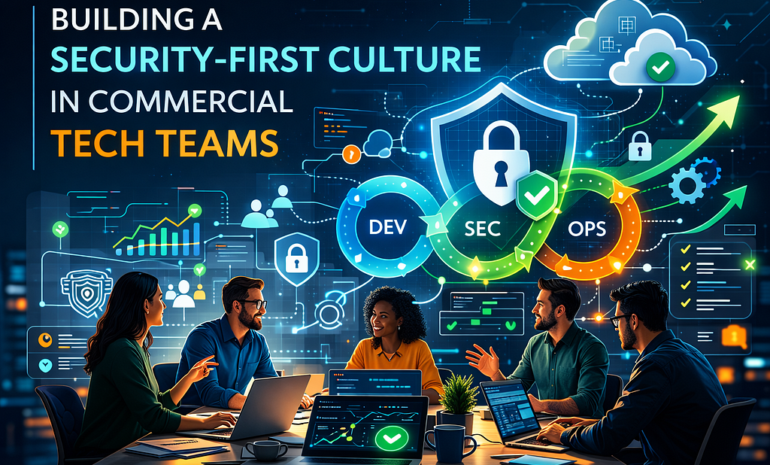
Section 4: Cultivating a Security-First Culture
Tools and practices alone aren’t enough. DevSecOps thrives where there is a cultural commitment to security.
Elements of a security-first culture:
- Shared ownership: Developers, operations, and security teams must collaborate closely and share responsibility.
- Continuous training: Regular security awareness sessions and hands-on labs (e.g., Capture The Flag exercises) empower teams.
- Leadership support: Executive buy-in ensures security investments and priorities are aligned with business goals.
A strong security culture reduces human error, accelerates innovation, and embeds trust at every layer of the development process.
Integrating DevSecOps into SaaS product development is not just a technical imperative; it’s a strategic differentiator. By adopting a “Secure by Design” mindset, organisations can deliver software that is not only functional and scalable but also robust and compliant.
The path to secure SaaS starts with embedding security in CI/CD pipelines, hardening cloud-native environments, and fostering a culture of shared responsibility. These principles fortify the integrity of the development lifecycle and instill confidence in stakeholders.
As the cyber threat landscape evolves, the question isn’t if you’ll integrate security by design, but how soon can you begin?
At BIBISERV, we help organisations build secure, scalable, and resilient SaaS platforms from the ground up. Whether you’re optimising your CI/CD pipelines, securing your cloud-native environments, or instilling a DevSecOps mindset in your teams, we provide end-to-end solutions tailored to your needs.