Bibiserv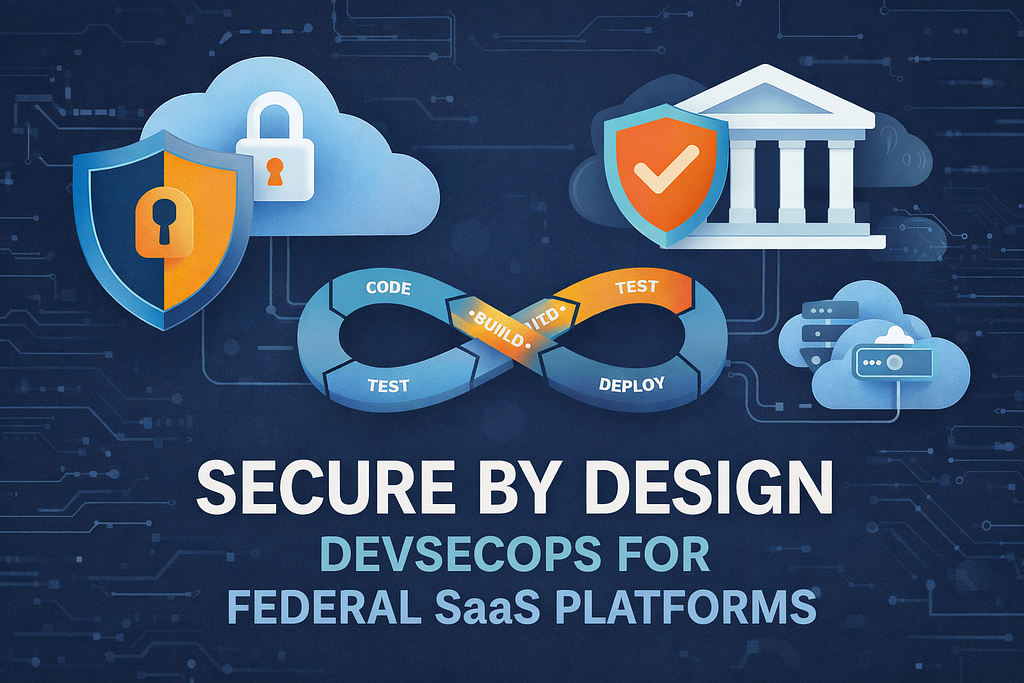
Federal agencies are accelerating their adoption of Software-as-a-Service (SaaS) to modernize mission delivery, improve efficiency, and enhance citizen services. But with this shift comes an uncompromising reality: security is not optional, and compliance is not negotiable.
For federal SaaS vendors, success in GovCon is no longer defined by features alone. It is defined by the ability to embed security into every layer of the software lifecycle — from architecture and code to deployment and operations — while meeting stringent frameworks such as NIST, DoD DevSecOps Reference Design, and Zero Trust mandates.
This is where DevSecOps, done right, becomes a strategic advantage rather than a compliance burden.
Why “Secure by Design” Is Critical for Federal SaaS
Traditional security models treated security as a final checkpoint — penetration testing before launch, documentation before audits, and patching after incidents. In federal environments, that approach simply doesn’t scale.
Federal SaaS platforms must contend with:
- Continuous authorization expectations
- High-value data and national security implications
- Aggressive threat actors, including nation-states
- Contractual compliance obligations (ATO, FedRAMP, DoD ILs)
A secure-by-design approach flips the model. Instead of asking “Is this system secure?” at the end, DevSecOps ensures security is engineered into the system from day one.
The result: faster approvals, fewer surprises during audits, and significantly reduced operational risk.
The Limits of “Bolt-On” Security
Many SaaS vendors entering the federal market struggle because they attempt to retrofit compliance into platforms built for commercial speed.
Common pitfalls include:
- Manual security reviews that slow delivery
- Late discovery of NIST control gaps
- Inconsistent security across environments
- CI/CD pipelines that lack policy enforcement
- Containers and cloud services deployed without hardened baselines
In GovCon, these gaps lead to delayed ATOs, failed security assessments, and lost contract opportunities.
DevSecOps addresses these challenges by automating trust and codifying compliance.
DevSecOps: The Foundation of Federal-Ready SaaS
At its core, DevSecOps integrates security, compliance, and delivery into a single continuous workflow.
For federal SaaS platforms, this means:
- Security controls mapped directly to NIST requirements
- Compliance validated continuously — not annually
- Faster, safer releases with built-in guardrails
Let’s look at how DevSecOps applies across the federal SaaS lifecycle.
Secure Architecture from Day One
Federal SaaS security starts long before the first line of code is written.
A secure-by-design architecture includes:
- Zero Trust principles: identity-centric access, least privilege, continuous verification
- Segmentation and isolation: tenant separation, network microsegmentation
- FedRAMP-aligned cloud services (AWS GovCloud, Azure Government, etc.)
- Defense-in-depth across network, application, and data layers
Architecture decisions directly influence your ability to meet NIST SP 800–53 and 800–171 controls. Poor architectural choices are expensive — if not impossible — to fix later.
Embedding Security into CI/CD Pipelines
For federal SaaS, CI/CD pipelines are not just delivery mechanisms — they are compliance engines.
A mature DevSecOps pipeline includes:
- Static Application Security Testing (SAST) for code vulnerabilities
- Dynamic Application Security Testing (DAST) for runtime behavior
- Software Composition Analysis (SCA) to manage open-source risk
- Infrastructure-as-Code (IaC) scanning for misconfigurations
- Policy-as-code enforcement mapped to NIST controls
Security gates are automated, repeatable, and auditable — reducing human error and accelerating delivery without sacrificing trust.
Containers, Kubernetes, and DoD-Aligned Platforms
Modern federal SaaS platforms increasingly rely on containers and Kubernetes. While powerful, these environments introduce new attack surfaces if not properly secured.
DevSecOps best practices for containerized federal SaaS include:
- Hardened base images aligned with DoD STIGs
- Image scanning and signing before deployment
- Runtime protection and behavioral monitoring
- RBAC, secrets management, and network policies
- Alignment with DoD DevSecOps Reference Design platforms (e.g., Iron Bank, Big Bang)
When done correctly, Kubernetes becomes an enabler of both scalability and compliance.
Continuous Compliance with NIST and DoD Requirements
Federal compliance is not a one-time event — it’s a continuous obligation.
DevSecOps enables continuous control validation by:
- Mapping pipeline checks directly to NIST controls
- Producing real-time compliance evidence
- Reducing audit fatigue and documentation overhead
- Supporting faster ATO and reauthorization cycles
This approach transforms compliance from a blocker into a business accelerator.
Common Mistakes Federal SaaS Vendors Make
Even experienced teams stumble when entering GovCon. The most frequent mistakes include:
- Treating compliance as documentation instead of engineering
- Assuming cloud-native services are automatically compliant
- Ignoring supply-chain and open-source risk
- Underestimating identity and access complexity
- Lacking DevSecOps maturity before pursuing federal contracts
Avoiding these missteps requires intentional design, tooling, and expertise.
How Federal SaaS Vendors Can Get Started
To build a federal-ready DevSecOps capability, SaaS vendors should:
- Assess current DevSecOps maturity against NIST and DoD frameworks
- Harden architecture and pipelines using secure-by-design principles
- Automate security and compliance checks across CI/CD
- Align teams around shared responsibility for security
- Partner with GovCon-experienced DevSecOps experts
This is not about slowing innovation — it’s about scaling securely.
Secure by Design Is a Competitive Advantage
In the federal market, trust is currency. Agencies expect SaaS vendors to demonstrate — not promise — security, resilience, and compliance.
DevSecOps makes that possible.
By embedding security from architecture through deployment, federal SaaS vendors can:
- Accelerate contract readiness
- Reduce security and compliance risk
- Deliver faster, safer updates
- Build long-term credibility with government customers
Call to Action: Federal DevSecOps Readiness Assessment
Is your SaaS platform truly secure by design — or is security still an afterthought?
BIBISERV helps federal SaaS vendors design, implement, and operationalize DevSecOps architectures aligned with NIST and DoD requirements.
👉 Start with a Federal DevSecOps Readiness Assessment
Identify gaps, reduce risk, and position your platform for federal success — before compliance becomes a blocker.
Secure smarter. Deliver faster. Win federal trust.