 Bibiserv
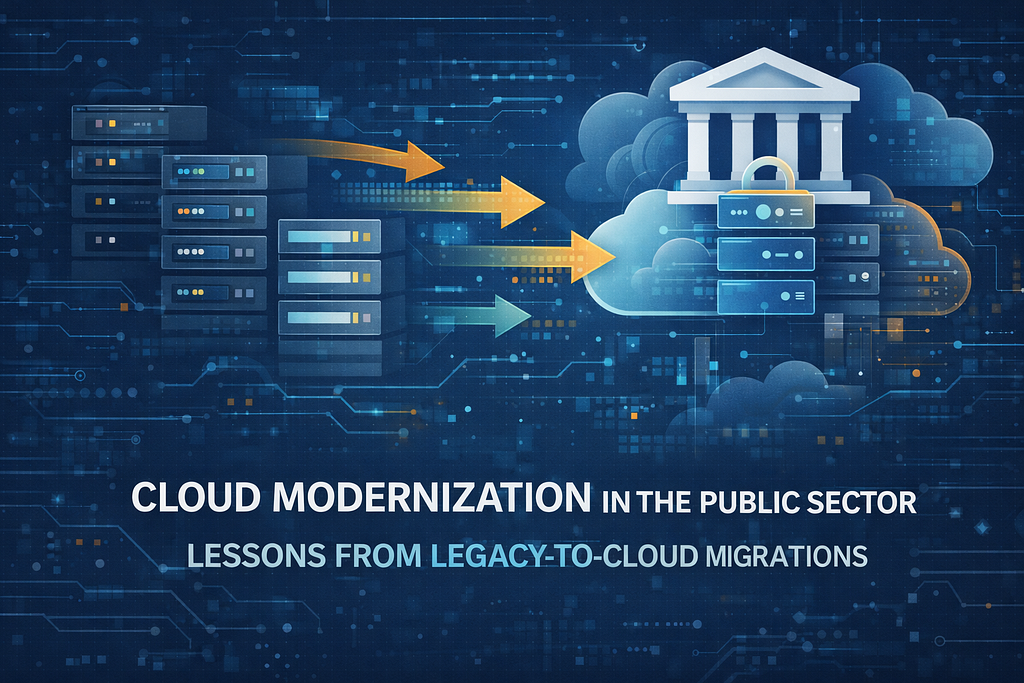
Across federal, state, and local government, cloud modernization is no longer a future aspiration — it is an operational necessity. Aging infrastructure, rising cybersecurity threats, and increasing expectations for digital public services are forcing agencies to rethink how mission systems are designed, operated, and secured.
Yet while the benefits of cloud adoption are well understood, legacy-to-cloud migrations in the public sector remain complex, high-risk undertakings. Mission systems often support life-critical services, regulatory compliance, and national security objectives. When modernization efforts fail — or stall — the consequences extend far beyond IT.
The good news: agencies that succeed tend to learn from a common set of lessons. Cloud modernization works best when treated not as a lift-and-shift exercise, but as a strategic transformation aligned with mission outcomes.
Why Public Sector Cloud Modernization Is Accelerating
Government agencies face mounting pressure to modernize for several reasons:
- Aging legacy systems that are costly to maintain and difficult to secure
- Cybersecurity mandates driven by Executive Orders, Zero Trust initiatives, and compliance frameworks
- Operational resilience requirements for always-on citizen and defense services
- Budget constraints that demand greater efficiency and scalability
- Public expectations for digital-first service delivery
Cloud platforms offer elasticity, built-in security capabilities, and faster innovation cycles — but only when migrations are executed thoughtfully.
Understanding Legacy Complexity in Government Systems
Legacy systems in government environments are rarely simple. Many were built decades ago, customized heavily over time, and tightly coupled to outdated technologies.
Common characteristics include:
- Monolithic architectures with limited modularity
- Hard-coded dependencies and brittle integrations
- Outdated operating systems and unsupported software
- Complex data models and undocumented business logic
Attempting a straight “lift-and-shift” often transfers these problems directly into the cloud — without delivering the expected gains in agility, security, or cost control.
Lesson learned: successful agencies begin with deep application and data discovery before choosing a migration strategy.
Security, Compliance, and Mission Assurance Must Come First
In the public sector, cloud modernization is inseparable from security and compliance.
Agencies must account for:
- FedRAMP authorization requirements
- FISMA security controls
- CJIS for law enforcement workloads
- Agency-specific and DoD requirements where applicable
Equally important is understanding the shared responsibility model. While cloud providers secure the infrastructure, agencies remain responsible for identity, access controls, data protection, monitoring, and configuration.
Security and compliance cannot be bolted on after migration. They must be designed into the architecture from day one.
Migration Strategies That Actually Work
Not all workloads require the same approach. Successful agencies use a portfolio-based strategy, often referred to as the “5 Rs”:
- Rehost: Move workloads with minimal change when speed is critical
- Re-platform: Make modest improvements without full refactoring
- Refactor: Redesign applications to fully leverage cloud-native services
- Retire: Decommission systems that no longer provide mission value
- Retain: Keep systems on-prem where cloud is not yet viable
The key is choosing the right strategy per workload, balancing modernization goals with operational continuity.
Lessons Learned from Legacy-to-Cloud Migrations
Across successful public sector migrations, several patterns consistently emerge:
1. Data Is Harder Than Applications
Data migration, governance, and integration often take more effort than application refactoring. Agencies that plan early for data architecture avoid major delays.
2. Process Modernization Matters
Moving to the cloud without modernizing processes results in cloud-hosted legacy operations. DevSecOps and automation are critical for long-term success.
3. Change Management Is Non-Negotiable
Cloud adoption impacts people, skills, and workflows. Training and stakeholder engagement are just as important as technical design.
4. Governance Enables Speed
Clear cloud governance — covering security, cost management, and architecture — prevents sprawl and accelerates delivery.
Preparing for Sustainable Cloud Operations
Cloud modernization doesn’t end at migration. Agencies must be prepared to operate and optimize in the cloud long-term.
Key capabilities include:
- DevSecOps pipelines for continuous delivery and security
- Automated compliance and monitoring
- Cost management and optimization
- High availability and disaster recovery planning
- Ongoing skills development for cloud operations teams
Agencies that invest in these capabilities realize the full value of cloud modernization — while those that don’t often struggle post-migration.
Cloud Modernization as a Mission Enabler
When done right, cloud modernization is far more than an infrastructure upgrade. It enables:
- Faster delivery of citizen services
- Stronger cybersecurity posture
- Improved resilience and uptime
- Better data sharing and analytics
- Greater agility in responding to mission demands
The most successful agencies treat cloud modernization as a mission enabler, not an IT project.
Start Your Cloud Modernization Journey with Confidence
Every agency’s modernization path is different — but the risks of getting it wrong are significant.
BIBISERV helps public sector organizations plan and execute secure, compliant, and mission-aligned cloud modernization initiatives — grounded in real-world GovCon experience.
👉 Schedule a Cloud Modernization Consultation
Assess your legacy environment, identify modernization opportunities, and build a practical roadmap for moving mission-critical systems to the cloud — securely and sustainably.
Modernize with purpose. Migrate with confidence. Deliver with impact.