 Bibiserv
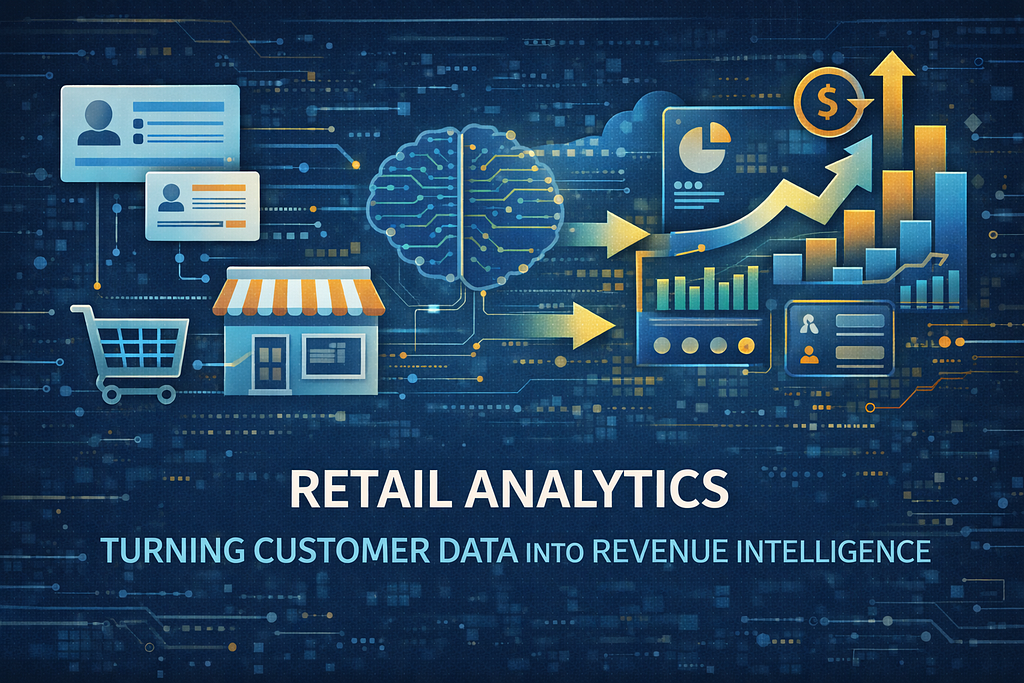
Retail has entered an era where intuition is no longer enough. Today’s consumers interact across physical stores, e-commerce platforms, mobile apps, and social channels — leaving behind vast amounts of behavioral data at every touchpoint. Retailers that can transform this data into actionable intelligence are gaining a decisive edge in revenue growth, operational efficiency, and customer experience.
Retail analytics is no longer about reporting what happened.
It’s about understanding why it happened, predicting what will happen next, and acting in real time to influence outcomes.
From inventory optimization to dynamic pricing and personalized experiences, behavioral analytics is becoming one of the most powerful revenue drivers in modern retail.
The Data Challenge Facing Modern Retailers
Retail organizations are sitting on more data than ever before, yet many still struggle to turn it into value. Common challenges include:
- Disconnected data across POS, e-commerce, loyalty, and supply chain systems
- Lagging insights from batch reports and static dashboards
- Inability to link customer behavior to revenue outcomes
- Overstock, stockouts, and margin erosion despite “data-rich” environments
The issue isn’t lack of data — it’s lack of intelligence.
Retail analytics bridges this gap by converting raw customer behavior into insights that directly inform decisions across merchandising, pricing, inventory, and customer experience (CX).
What Is Retail Analytics — And Why It Matters Now
Retail analytics combines data engineering, behavioral analytics, and advanced modeling to analyze how customers interact with products, channels, and promotions.
Key data sources include:
- Transaction and POS data
- Online browsing and clickstream behavior
- Loyalty and customer profile data
- Inventory and supply chain signals
- External factors such as seasonality, location, and trends
When unified and analyzed effectively, these data streams reveal patterns that drive smarter decisions — and measurable revenue impact.
Optimizing Inventory with Behavioral Analytics
Inventory remains one of the largest cost centers — and risk areas — for retailers. Overstock ties up cash, while stockouts lead directly to lost sales and customer frustration.
Behavioral analytics enables retailers to:
- Predict demand at the SKU and location level
- Identify early signals of demand spikes or slow movers
- Align replenishment strategies with real customer behavior
- Reduce excess inventory without increasing risk
Instead of relying solely on historical sales, advanced analytics factors in browsing behavior, cart abandonment, promotions, and regional preferences — resulting in more accurate, responsive inventory planning.
Data-Driven Pricing and Promotion Strategy
Pricing decisions have traditionally relied on static rules, competitor benchmarks, or periodic reviews. Behavioral analytics changes this approach entirely.
Retailers can now:
- Analyze price sensitivity by customer segment
- Test and optimize promotions in near real time
- Identify when discounts drive volume versus margin erosion
- Adjust pricing dynamically based on demand signals
By understanding how customers respond to price changes — not just what they buy — retailers can protect margins while remaining competitive.
Personalizing Customer Experience at Scale
Customer experience is no longer a brand differentiator — it’s a baseline expectation. Consumers expect relevance, speed, and consistency across channels.
Retail analytics powers personalization by:
- Segmenting customers based on real behavior, not assumptions
- Delivering tailored product recommendations and offers
- Optimizing channel-specific engagement strategies
- Improving retention and lifetime value
When personalization is driven by analytics instead of guesswork, it becomes scalable, measurable, and directly tied to revenue outcomes.
From Dashboards to Decisions: Real-Time Retail Intelligence
Many retailers still rely on dashboards that explain yesterday’s performance. The next generation of retail analytics focuses on decision enablement.
Modern retail analytics platforms support:
- Near real-time insight into customer behavior
- Predictive models for demand, churn, and promotion performance
- Alerts and recommendations embedded into business workflows
- Cross-functional visibility across merchandising, marketing, and supply chain
The goal is not more reports — it’s faster, better decisions at every level of the organization.
Building a Retail Analytics Foundation That Delivers Value
Successful retail analytics initiatives share a few critical traits:
- Unified Data Architecture
Integrating POS, e-commerce, inventory, and customer data into a single analytics foundation. - Advanced Analytics and AI Models
Moving beyond descriptive reporting to predictive and prescriptive insights. - Business-Driven Use Cases
Focusing analytics on revenue, margin, and CX — not vanity metrics. - Data Literacy and Adoption
Ensuring teams can interpret and act on insights, not just view them.
Retail analytics is not a one-time project — it’s a capability that evolves alongside customer expectations and market conditions.
Retail Analytics as a Revenue Strategy
Retail leaders who treat analytics as a strategic investment — not an IT initiative — are seeing tangible results:
- Improved inventory turnover and reduced waste
- Higher conversion rates and average order value
- Stronger customer loyalty and retention
- Better alignment between operations, marketing, and finance
In an increasingly competitive market, data-driven retailers don’t just react — they lead.
Turn Your Data into Revenue Intelligence
Retail analytics delivers the most value when it is tailored to your business model, data landscape, and growth goals.
BIBISERV helps retailers design and implement analytics solutions that turn customer behavior into clear, actionable revenue intelligence — from inventory optimization to pricing strategy and personalized CX.
👉 Schedule an Analytics Discovery Session
Assess your current analytics maturity, identify high-impact opportunities, and build a roadmap to turn customer data into measurable business outcomes.
Your data already knows the answers. Let’s put it to work.