 Bibiserv
A Strategic View of Federal IT Modernization
Federal technology programs are entering a decisive era.
For decades, government IT systems were built around long procurement cycles, monolithic architectures, and rigid delivery models. While these systems supported mission operations for years, the demands placed on federal technology environments today are dramatically different.
Agencies must now deliver secure digital services, real-time operational insight, and resilient infrastructure while facing increasingly sophisticated cyber threats and rapidly evolving mission requirements.
Modernization is no longer simply about upgrading legacy infrastructure. It is about transforming how government systems are built, secured, and operated.
Across defense, civilian agencies, and federal healthcare programs, a clear direction is emerging.
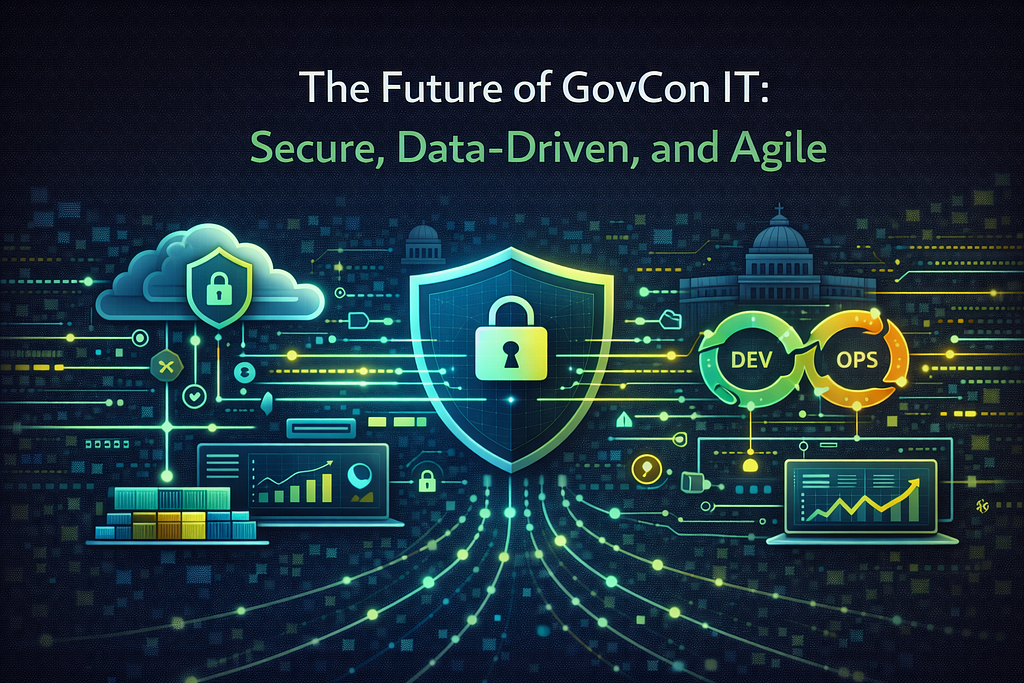
The future of GovCon IT will be secure by design, powered by data, and delivered through agile engineering models.
Federal IT at an Inflection Point
Federal agencies are operating in a technology landscape defined by complexity and urgency.
Mission operations now depend on systems that must handle:
- large volumes of operational data
- distributed cloud environments
- advanced analytics and AI workloads
- highly sensitive information requiring strict security controls
At the same time, agencies face persistent challenges such as:
- aging legacy systems
- limited interoperability between platforms
- slow technology refresh cycles
- growing cybersecurity risks
These challenges have accelerated federal modernization initiatives focused on cloud adoption, secure software delivery, and data-driven decision-making.
Programs across government are now prioritizing architectures that enable continuous innovation while maintaining security and compliance.
Security as the Foundation of Modern Federal IT
Cybersecurity has become the defining priority for federal technology programs.
Government systems are prime targets for nation-state actors, organized cybercrime groups, and advanced persistent threats. The traditional approach of adding security controls after systems are built is no longer viable.
Modern federal architectures must be secure from the start.
This shift is driving the adoption of Zero Trust security models, which assume that no user, device, or system should be trusted automatically.
Zero Trust architectures emphasize:
- continuous identity verification
- least-privilege access control
- encrypted communications across systems
- real-time monitoring and threat detection
In parallel, agencies are integrating cybersecurity into software development processes through DevSecOps pipelines.
DevSecOps embeds automated security testing directly into the development lifecycle. Instead of discovering vulnerabilities late in the deployment process, teams detect and resolve issues earlier.
The result is stronger security without slowing down innovation.
For GovCon programs, this approach aligns with modern compliance frameworks while supporting faster capability delivery.
Data-Driven Government Operations
Federal agencies generate vast quantities of operational data across mission environments.
Historically, much of this data remained underutilized because systems lacked the ability to process and analyze information quickly.
Today, modern data platforms and advanced analytics tools are transforming how agencies leverage information.
By integrating data across systems, agencies can create unified analytics environments that support:
- real-time operational dashboards
- predictive analytics for mission planning
- AI-assisted decision support systems
- automated anomaly detection and risk analysis
These capabilities allow leaders to make decisions based on current operational conditions rather than historical reporting cycles.
Examples of data-driven government operations include:
- predictive logistics forecasting for defense operations
- public health analytics supporting rapid response planning
- real-time situational awareness platforms for emergency management
In these environments, data becomes a strategic asset that enhances mission readiness and operational efficiency.
Agile and DevSecOps Transforming Federal Delivery
Traditional government technology programs often followed waterfall delivery models. These models required long planning phases followed by large, infrequent releases.
While predictable, this approach often delayed innovation and made it difficult to respond to evolving mission needs.
Modern federal programs are increasingly adopting Agile delivery models combined with DevSecOps practices.
Agile development focuses on delivering capabilities incrementally, allowing teams to release improvements continuously while gathering feedback from stakeholders.
DevSecOps complements this model by automating testing, security checks, and deployment processes.
Together, Agile and DevSecOps enable agencies to:
- release new capabilities faster
- reduce deployment risk
- maintain continuous compliance
- adapt quickly to changing requirements
This transformation is particularly important for mission systems that must evolve rapidly while remaining secure.
Cloud as the Platform for Government Innovation
Cloud computing has become a foundational element of federal modernization strategies.
Unlike traditional data centers, cloud environments provide scalable infrastructure that can adapt dynamically to changing workloads.
For government agencies, cloud platforms enable several important advantages.
Scalability
Cloud infrastructure allows agencies to scale computing resources based on mission demand without investing in additional physical hardware.
Resilience
Distributed cloud architectures support redundancy and disaster recovery capabilities that help maintain system availability during disruptions.
Speed of Deployment
Cloud platforms enable rapid provisioning of development and production environments, allowing teams to build and deploy applications faster.
Collaboration Across Agencies
Cloud platforms facilitate secure data sharing and collaboration across departments and mission environments.
Many agencies now operate hybrid or multi-cloud environments, allowing them to modernize legacy systems while maintaining operational continuity.
The Emerging GovCon Technology Ecosystem
The federal technology landscape is evolving into a more collaborative ecosystem.
Large prime contractors continue to play a central role in delivering major government programs. At the same time, agencies increasingly rely on specialized technology partners that bring expertise in areas such as:
- cloud-native architecture
- DevSecOps implementation
- cybersecurity engineering
- advanced analytics and AI platforms
This shift reflects the growing complexity of modern IT environments.
No single organization can address every aspect of federal modernization alone. Instead, successful programs rely on collaboration between agencies, prime contractors, and specialized technology integrators.
This ecosystem enables government organizations to access cutting-edge capabilities while maintaining compliance with federal security and governance frameworks.
The Next Era of Federal IT
Federal technology modernization is entering a new phase.
The focus is no longer simply on replacing outdated infrastructure. Instead, agencies are building secure digital ecosystems capable of supporting complex mission environments.
Future federal IT programs will increasingly emphasize:
- secure-by-design architectures
- data-driven operational insight
- agile delivery and DevSecOps pipelines
- scalable cloud platforms
Organizations that embrace these principles will be better positioned to support mission outcomes and deliver reliable digital services to the public.
For GovCon leaders and federal technology teams, the path forward is clear.
Modern IT environments must combine security, data intelligence, and agility to support the next generation of government operations.
Call to Action
Federal IT modernization requires more than new technology. It requires a strategic approach that aligns security, data platforms, cloud infrastructure, and agile delivery models.
BIBISERV’s Federal IT Modernization Strategy Session helps organizations evaluate:
- modernization readiness for mission systems
- DevSecOps and agile delivery maturity
- cloud architecture and security posture
- data and analytics capabilities
Schedule a Federal IT Modernization Strategy Session with BIBISERV to explore how secure, data-driven, and agile architectures can accelerate your organization’s digital transformation.