 Bibiserv
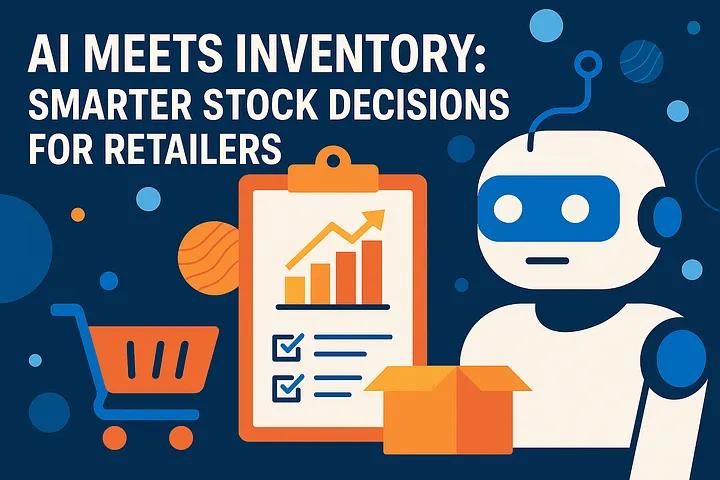
Inthe fast-paced world of retail, effective inventory management is crucial. Traditional methods often lead to challenges like stockouts and overstocking, resulting in lost sales or excess holding costs. Enter Artificial Intelligence (AI) and Machine Learning (ML) — technologies that are revolutionising inventory management by enabling predictive analytics and smarter decision-making.
The Cost of Getting Inventory Wrong
Inaccurate inventory forecasting can have significant financial implications. Stockouts may lead to missed sales opportunities and dissatisfied customers, while overstocking ties up capital and increases storage costs. According to a study, companies utilising predictive analytics for inventory management observed a 10–15% improvement in cash flow due to reduced inventory costs and enhanced sales efficiency. LinkedIn
How AI and ML Transform Inventory Planning
AI and ML algorithms analyse vast datasets, including historical sales, seasonal trends, and external factors like weather or social media trends, to forecast demand accurately. These technologies adapt in real-time, allowing retailers to respond swiftly to changing market conditions. By moving beyond static rules and manual spreadsheets, AI-driven systems offer dynamic and precise inventory planning.
Real-World Applications in Retail
Retailers are leveraging AI to enhance various aspects of inventory management:
- Demand Forecasting: AI predicts customer demand with higher accuracy, reducing the risk of stockouts.
- Automated Reordering: Systems automatically replenish stock based on predictive analytics, ensuring optimal inventory levels.
- Dynamic Pricing: AI adjusts prices in real-time to manage excess inventory effectively.
For instance, Target implemented AI in its inventory management, significantly reducing instances of overstock and understock across its stores. DigitalDefynd+1Wairforretail+1
Smarter Stocking with Omnichannel Insights
AI integrates data across in-store, online, and warehouse systems, providing a unified view of inventory. This holistic approach enables retailers to:
- Allocate Stock Efficiently: Distribute inventory based on channel-specific demand.
- Optimise Fulfilment: Fulfil orders from the most efficient location, reducing delivery times and costs.
- Enhance Customer Satisfaction: Ensure product availability across all sales channels.retailcloud+1SAP+1
Tools and Technologies Driving Inventory Intelligence
Several platforms are at the forefront of AI-driven inventory management:
- Microsoft Dynamics 365 Supply Chain Management: Offers predictive insights and intelligence across planning, production, inventory, warehouse, and transportation management. TrustRadius+1Gartner+1
- SAP Integrated Business Planning (IBP): Combines predictive analytics with AI to streamline processes from inventory management to demand planning. Cogent Infotech
- Oracle Inventory Management: Provides real-time visibility and automation for critical tasks like stock replenishment. finallyrobotic.com
Making the AI Leap — What Retailers Should Consider
Adopting AI in inventory management requires strategic planning:
- Data Quality: Ensure clean, centralised data for accurate analytics.
- Identify High-Impact SKUs: Focus on products that significantly affect revenue.
- Platform Selection: Choose systems with built-in AI capabilities that align with business needs.
- Team Training: Educate staff to interpret AI insights effectively and integrate them into decision-making processes.
Conclusion: Smarter Inventory Is a Competitive Advantage
AI-driven inventory management is not just about automation; it’s about achieving agility and accuracy in stock decisions. Retailers embracing these technologies position themselves to meet customer demands efficiently, reduce costs, and stay ahead in a competitive market.
Ready to revolutionise your retail operations? Let BIBISERV help you unlock inventory intelligence that delivers results.