 Bibiserv
Why People and Process Matter as Much as Tooling
Cybersecurity investments have grown dramatically across the technology industry. Organizations deploy advanced threat detection systems, vulnerability scanners, identity management platforms, and cloud security tools.
Yet breaches continue to occur.
In many cases, the root cause is not the absence of security technology. Instead, it is the absence of a security-first culture across engineering and operational teams.
Modern commercial technology companies operate in environments where software is continuously deployed, infrastructure scales dynamically, and digital services handle vast amounts of sensitive data. In these conditions, cybersecurity cannot be isolated within a single security team.
Security must become an organizational capability shared by developers, product teams, operations engineers, and leadership.
Companies that succeed in building a security-first culture reduce risk, respond to threats faster, and maintain the trust that underpins digital businesses.
Security Is a Cultural Challenge
Many organizations still approach cybersecurity as a compliance exercise.
Security reviews may occur at the end of development cycles. Penetration tests may happen just before major releases. Vulnerability remediation is often treated as a secondary task compared to feature delivery.
This approach creates a fundamental problem.
By the time security issues are discovered, fixing them is often expensive, disruptive, and time-consuming.
More importantly, treating security as an afterthought creates a culture where teams assume that security is someone else’s responsibility.
A security-first culture shifts this mindset.
Instead of being a checkpoint, security becomes an integrated part of how systems are designed, built, and operated.
Every team member understands that protecting systems and data is a shared responsibility.
Why Tooling Alone Is Not Enough
Organizations frequently respond to cybersecurity challenges by purchasing new tools.
While tools are important, they cannot solve cultural and process challenges.
Even the most advanced security platforms can fail if:
- developers bypass security checks to meet deadlines
- infrastructure is misconfigured during deployment
- vulnerabilities remain unpatched due to unclear ownership
- identity and access policies are inconsistently enforced
Security tools generate alerts and insights, but human decisions ultimately determine whether vulnerabilities are addressed.
Effective cybersecurity requires alignment between technology, processes, and people.
Without that alignment, security tools often become underutilized or ignored.
Embedding Security into Engineering Workflows
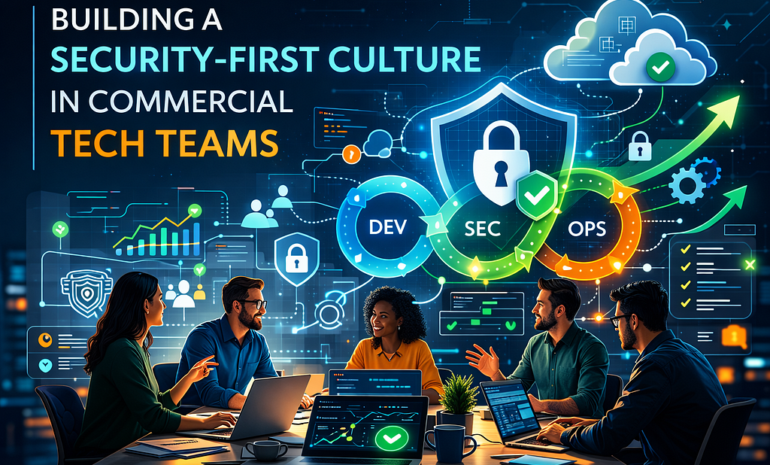
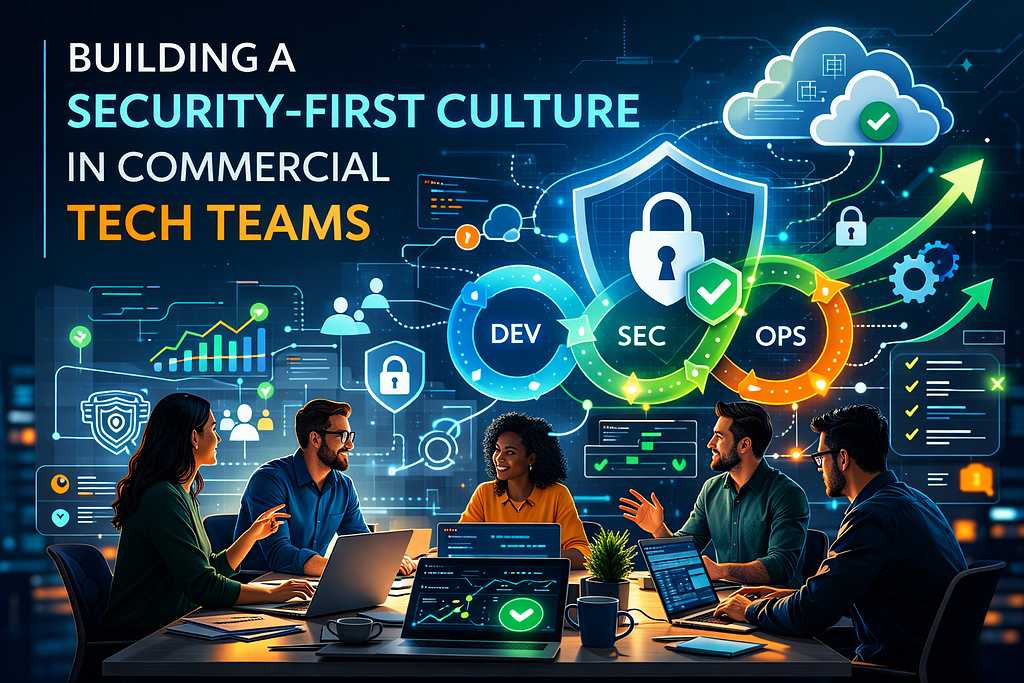
One of the most effective ways to build a security-first culture is to integrate security directly into engineering workflows.
This approach is commonly referred to as DevSecOps.
DevSecOps extends the DevOps model by embedding security checks throughout the software development lifecycle.
Instead of performing security testing at the end of development, automated controls run continuously during development and deployment.
Key DevSecOps practices include:
- automated vulnerability scanning of application code
- software composition analysis for open-source dependencies
- infrastructure-as-code security validation
- automated compliance checks within CI/CD pipelines
These automated controls ensure that security vulnerabilities are detected early, when they are easier and less expensive to resolve.
Equally important, they allow engineering teams to maintain rapid development cycles without sacrificing security.
Empowering Developers as Security Contributors
Developers play a central role in modern cybersecurity.
Most vulnerabilities originate within application code, APIs, or infrastructure configurations. As a result, developers are often the first line of defense against security risks.
Organizations that build security-first cultures empower developers with the knowledge and tools needed to identify vulnerabilities during development.
Several strategies support this approach.
Secure Coding Education
Training programs help developers understand common vulnerabilities such as:
- injection attacks
- insecure authentication flows
- improper input validation
- insecure data handling practices
When developers understand these risks, they can design safer code from the beginning.
Security Champions Programs
Many organizations designate security champions within engineering teams.
These individuals act as liaisons between development teams and security teams, helping to promote secure development practices and provide guidance on security issues.
Integrated Security Feedback
Security feedback should be delivered through the tools developers already use.
For example, vulnerability alerts integrated into development environments or CI pipelines allow developers to address issues immediately rather than waiting for separate security reviews.
This integration reduces friction and encourages faster remediation.
Leadership and Organizational Alignment
Building a security-first culture requires leadership commitment.
Engineering leaders, product managers, and executives must communicate clearly that cybersecurity is a priority.
This commitment should be reflected in operational decisions, including:
- allocating time for vulnerability remediation
- incorporating security requirements into product roadmaps
- supporting cross-team collaboration between security and engineering teams
- aligning incentives with secure development practices
When leadership prioritizes security alongside innovation and speed, teams are more likely to treat it as an integral part of their work.
Conversely, if delivery deadlines consistently override security considerations, teams may develop habits that undermine security posture.
Culture ultimately reflects the priorities leaders reinforce.
Measuring Security Culture Maturity
Security culture should not be treated as an abstract concept. Organizations must measure progress to understand whether their initiatives are effective.
Several indicators help assess security maturity.
Examples include:
- average time to remediate vulnerabilities
- adoption of secure code review practices
- participation in security training programs
- number of security issues identified during development rather than after release
- incident response readiness and recovery times
Tracking these metrics allows organizations to identify gaps and continuously improve their cybersecurity posture.
Over time, mature security cultures demonstrate measurable improvements in both risk reduction and operational efficiency.
Security as a Competitive Advantage
Organizations that successfully build security-first cultures gain more than protection from cyber threats.
They gain the ability to innovate with confidence.
When security is integrated into development processes and organizational culture, teams can release new capabilities faster without introducing unacceptable risk.
Customers, partners, and investors increasingly evaluate companies based on their cybersecurity posture.
Strong security practices therefore contribute directly to customer trust, regulatory compliance, and brand reputation.
In an era where digital platforms underpin nearly every industry, cybersecurity has become a critical differentiator.
Security Is Everyone’s Responsibility
Cybersecurity cannot be solved by technology alone.
It requires a culture where developers, engineers, product leaders, and executives work together to protect systems and data.
Organizations that embed security into their engineering culture benefit from stronger defenses, faster incident response, and more resilient platforms.
A security-first culture does not slow innovation.
When implemented effectively, it enables organizations to move faster while maintaining the trust that modern digital businesses depend on.
Call to Action
Building a security-first engineering culture requires alignment across people, processes, and technology.
BIBISERV’s Security-First Engineering Assessment helps organizations evaluate:
- DevSecOps security maturity
- secure development lifecycle practices
- developer security training and culture
- cloud and application security architecture
Schedule a Security-First Engineering Assessment with BIBISERV to strengthen your organization’s cybersecurity culture and build more resilient digital platforms.