 Bibiserv
Inrecent years, supply chains have been tested like never before. From pandemic-induced shutdowns and port congestions to geopolitical tensions and rapid demand shifts, global supply networks are operating in an era of relentless volatility. For organisations across industries — manufacturing, retail, logistics, government — this turbulence has revealed a hard truth: traditional, reactive supply chain models are no longer sustainable.
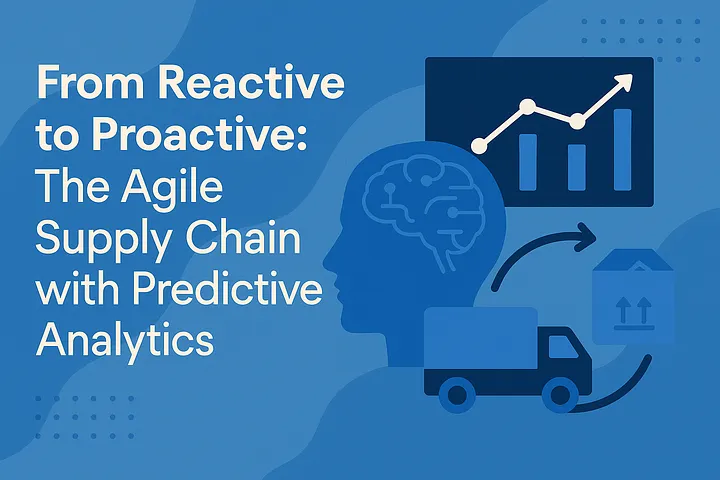
To remain competitive and resilient, enterprises must shift from reacting to disruptions to anticipating and mitigating them before they occur. Enter predictive analytics — a game-changing capability that transforms the supply chain from a reactive cost centre into a proactive, value-driving asset.
What Is Predictive Analytics in the Supply Chain?
At its core, predictive analytics leverages historical data, real-time inputs, and advanced technologies such as machine learning, statistical modelling, and AI-based forecasting to anticipate future outcomes. In the context of the supply chain, it enables organisations to forecast demand fluctuations, identify potential disruptions, and optimise resource allocation with greater accuracy and agility.
Instead of responding to stockouts or delays after they happen, predictive analytics empowers businesses to plan intelligently and act early — moving from “firefighting” mode to foresight-driven execution.
Application Areas of Predictive Analytics
1. Transportation & Logistics
Transportation is often the first and most visible area affected by supply chain disruptions. Predictive analytics provides real-time insights that allow logistics teams to:
- Predict delays due to weather, traffic congestion, customs backlogs, or equipment failures.
- Reroute shipments dynamically to avoid bottlenecks.
- Optimise delivery schedules and reduce fuel consumption through route forecasting.
For example, a predictive model may combine weather forecasts, port congestion data, and fleet availability to automatically recommend the most efficient cross-border delivery route — reducing lead times and improving on-time delivery rates.
2. Warehousing & Inventory Management
Inventory mismanagement — whether in the form of stockouts or overstock — directly impacts customer satisfaction and operational cost. Predictive analytics supports:
- Demand surge forecasting, enabling smarter seasonal and promotional planning.
- Dynamic inventory optimisation, adjusting safety stock levels based on real-time demand signals.
- Return rate forecasting, helping prepare warehouse workflows in advance.
Modern warehouses also use predictive reorder points and automated replenishment models to maintain optimal inventory without human intervention.
3. Procurement & Supplier Risk Management
Procurement teams are under pressure to manage complex vendor ecosystems while minimising costs and ensuring continuity. Predictive analytics helps by:
- Anticipating supplier disruptions through early warning indicators such as financial health, geopolitical risk, and ESG compliance.
- Forecasting raw material price trends, allowing strategic sourcing decisions ahead of price spikes.
- Reducing procurement cycle times by identifying high-risk purchases and proactively managing vendor relationships.
By combining third-party risk data, supplier performance metrics, and market indices, predictive tools help procurement leaders make faster, smarter buying decisions.
The Benefits of a Predictive, Agile Supply Chain
Implementing predictive analytics delivers measurable gains across the supply chain:
- Enhanced agility in responding to unexpected events.
- Reduced operational costs through optimised logistics and procurement.
- Improved customer experience via better availability and delivery accuracy.
- Greater visibility into the end-to-end supply chain, enabling early risk identification.
- Cross-functional alignment — with finance, operations, and procurement teams working from a shared forecasting model.
Ultimately, predictive analytics equips supply chain organisations with speed, resilience, and insight — all critical in today’s high-stakes environment.
Enabling Predictive Supply Chains — Tools & Technologies
Building predictive capabilities requires a robust tech stack and data strategy. Key enablers include:
- Data lakes or centralised platforms that consolidate supply chain, ERP, IoT, and external data.
- AI/ML modelling tools such as AWS Forecast, SAS, IBM Watson, or Azure Machine Learning.
- Modern ERP and SCM systems (e.g., SAP, Oracle, Microsoft Dynamics) with embedded analytics.
- High data quality standards and real-time integration between teams and systems.
More importantly, organizations must break down silos between data science, operations, and procurement to realize the full value of predictive insights.
Getting Started — Building a Predictive Supply Chain Strategy
Transforming from reactive to predictive doesn’t happen overnight. Here’s a practical roadmap:
- Start with data readiness: Cleanse, integrate, and map your internal and external data sources.
- Identify high-value use cases: Focus on areas with the most volatility, such as demand forecasting, lead time variability, or supplier risk.
- Pilot predictive models: Test small-scale models before rolling them out organisation-wide.
- Train and align teams: Build cross-functional collaboration between analytics, IT, logistics, and procurement teams.
- Scale and automate: Once models show value, embed them into workflows and scale them across global operations.
By taking a phased approach, businesses can quickly capture ROI and build momentum for long-term transformation.
From Guesswork to Foresight
As the global supply chain landscape grows more complex, the ability to see around corners is no longer optional — it’s essential. Predictive analytics offers a powerful framework for shifting from guesswork to data-driven foresight, from reactivity to resilience and agility.
Whether you’re managing a regional warehouse network or a global procurement operation, the message is clear: The future of the supply chain is predictive, intelligent, and agile.
Partner with BIBISERV to Build a Predictive Supply Chain
At BIBISERV, we specialise in helping organisations harness the power of predictive analytics, AI, and automation to build smarter, more resilient supply chains. From strategy to implementation, our experts support you in transforming data into foresight — so you can act before disruption hits.
Let’s make your supply chain smarter.