 Bibiserv
A Shift in the Government IT Paradigm
Government IT programs have historically faced daunting challenges — multi-year timelines, rigid procurement cycles, ballooning budgets, and, too often, underwhelming results. In an era when citizens expect seamless digital services and evolving cyber threats demand rapid response, this status quo is no longer sustainable.
Enter Agile and DevSecOps — methodologies proven in the private sector and now gaining ground across federal, state, and local agencies. Together, they are transforming how government builds, secures, and delivers technology, fostering speed, security, and service quality from procurement through operations.
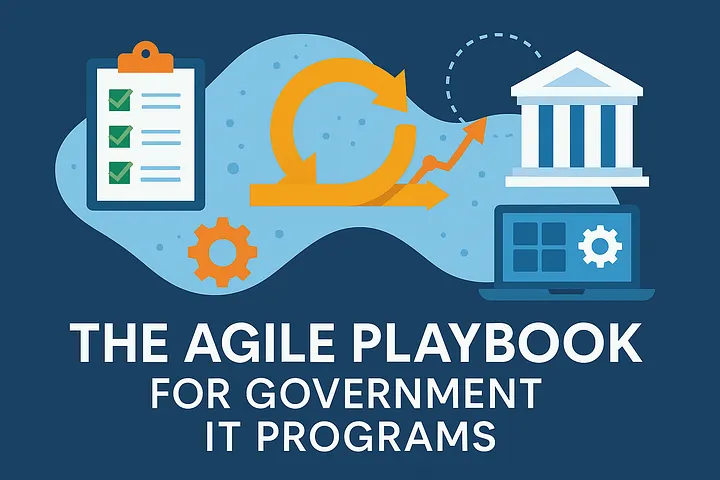
This playbook outlines how public sector IT leaders can adopt Agile and DevSecOps practices to deliver secure, user-centred solutions that evolve at the pace of mission needs.
Why Government Needs Agile and DevSecOps Now
The Pressure Is On
Public sector leaders are navigating a perfect storm of:
- Rising expectations from citizens for mobile-first, always-on government services.
- Mounting cybersecurity threats, including ransomware and nation-state actors.
- Rigid regulations and evolving policies, such as FedRAMP, FISMA, and Executive Orders on cyber resilience.
In this environment, legacy waterfall development — with its long cycles and inflexible scope — is no longer viable.
Agile and DevSecOps offer an alternative: short iterations, fast feedback loops, integrated security, and the ability to deliver value incrementally and continuously.
Agile for Government — Tailoring the Framework
Agile in the public sector isn’t just about sprint planning — it’s about reshaping how programs are conceived, procured, and measured.
Key Adaptations for Government:
- SAFe and Scrum: Scalable frameworks that align delivery teams with strategic goals.
- Modular Contracting: Breaks large, monolithic RFPs into manageable, iterative work packages.
- Outcome-Based Metrics: Focuses on mission value (not just completion milestones).
- Cross-Functional Collaboration: Product owners, developers, and compliance officers working as one team.
Example: The U.S. Department of Veterans Affairs (VA) leveraged Agile to modernise its benefits portal, enabling frequent user testing, reducing delivery risk, and accelerating time to value.
DevSecOps — Security and Compliance from Day One
Cybersecurity is non-negotiable in government. Yet in traditional models, security is bolted on at the end — leading to delays, rework, or worse: breaches.
DevSecOps integrates security as code, embedding compliance and risk mitigation into every phase of development and deployment.
DevSecOps in Government Means:
- Secure Containers: Using hardened images from repositories like Iron Bank.
- Automated Testing: Scanning code and infrastructure for vulnerabilities continuously.
- Infrastructure as Code (IaC): Enabling consistent, auditable deployments.
- Continuous Authorisation (cATO): Shifting away from static ATO toward continuous risk assessments aligned with NIST SP 800–53 and FedRAMP.
Example: The U.S. Air Force’s “Platform One” initiative uses DevSecOps pipelines to deliver secure, cloud-native applications faster while maintaining strict compliance with DoD standards.
Case Studies and Success Stories
- General Services Administration (GSA): Applied Agile principles to build and scale login.gov, improving security and user experience across federal websites.
- Centres for Medicare & Medicaid Services (CMS): Adopted DevSecOps to modernise its data systems, accelerating the deployment of critical analytics capabilities during the COVID-19 pandemic.
- State and Local Governments: Are deploying modular, Agile-based grants management systems, reducing delivery time from 24 months to under 12.
These examples show that agility is achievable in government — at scale and with measurable outcomes.
How to Get Started
Ready to move from legacy models to Agile success? Here’s how:
1. Build an Agile Centre of Excellence (CoE)
Establish governance, playbooks, and reusable assets across teams and agencies.
2. Train & Upskill
Equip teams with Agile, Scrum, and DevSecOps certifications. Encourage cross-training between IT, security, and procurement.
3. Modernise Procurement
Work with acquisition officers to introduce modular contracting, performance-based incentives, and Agile-aligned evaluation criteria.
4. Automate the Pipeline
Stand up DevSecOps CI/CD pipelines using tools like Jenkins, GitLab CI, SonarQube, and automated security scanning.
5. Define Agile Metrics That Matter
Track velocity, cycle time, defects, and stakeholder satisfaction — not just status reports.
Building Resilient, Citizen-Centred IT Programs
Agile and DevSecOps aren’t just buzzwords — they are strategic enablers for government agencies striving to meet the moment. Whether you’re modernising a benefits portal, deploying a public health platform, or securing national defence systems, these practices drive faster delivery, stronger cybersecurity, and better citizen outcomes.
The path forward is clear: adopt Agile, automate security, and embrace continuous improvement.
Planning to modernise your government IT program?
Partner with BIBISERV to design and deliver secure, Agile, and compliant solutions tailored to mission-critical public sector needs. Let’s build the future of digital government — faster, safer, and smarter.