 Bibiserv
Across the globe, governments are under mounting pressure to modernise their IT infrastructure and improve service delivery in an era where digital expectations are rapidly evolving. Citizens demand the same level of efficiency, accessibility, and responsiveness from public agencies that they receive from the private sector. At the same time, governments are tasked with managing tight budgets, adhering to stringent compliance requirements, and maintaining critical services 24/7.
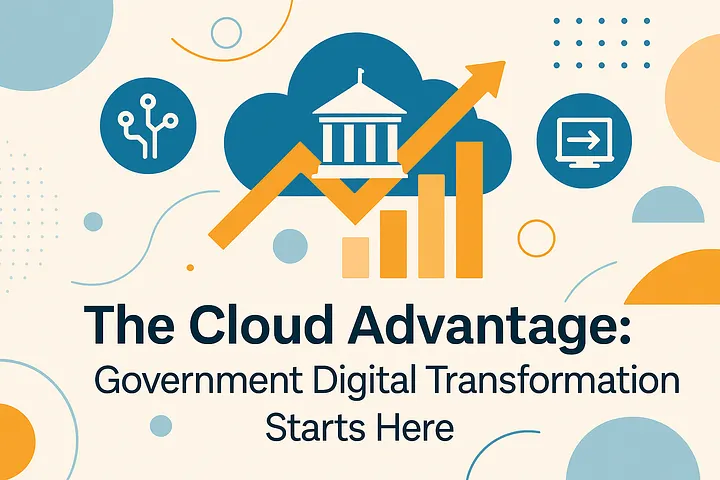
This convergence of challenges has made it clear: digital transformation is no longer optional for the public sector — it is imperative. At the heart of this transformation lies a foundational technology that has already revolutionised enterprise IT — the cloud.
Modern cloud solutions empower governments to deliver secure, scalable, and citizen-centric digital services while fostering interagency collaboration and operational agility. Whether it’s improving access to benefits, modernising back-end systems, or responding swiftly to emergencies, cloud computing is the engine driving 21st-century governance.
Why Governments Are Moving to the Cloud
Public sector organisations are increasingly embracing cloud technology for a variety of compelling reasons:
- Rising demand for remote and digital-first services: In the wake of the COVID-19 pandemic and the shift toward hybrid work models, citizens and government employees alike require uninterrupted digital access to services and platforms.
- Outdated legacy infrastructure: Many agencies still rely on decades-old systems that are difficult to maintain, expensive to upgrade, and incompatible with modern service expectations.
- Budget constraints: Cloud solutions offer a cost-effective alternative to traditional IT infrastructure by enabling pay-as-you-go models, reducing capital expenditures, and minimising downtime.
- Elastic scalability and rapid deployment: With cloud, governments can rapidly scale up services during peak demand, such as during natural disasters, elections, or benefit disbursements, and scale down when demand subsides, optimising resource use.
In short, cloud computing provides the agility and efficiency that legacy systems lack, while future-proofing infrastructure for evolving needs.
Enabling Citizen-Centric Services
One of the most powerful advantages of the cloud is its ability to help governments build and deploy services around the needs of the people they serve.
Today’s citizens expect digital services that are intuitive, responsive, and available anytime, anywhere. Cloud technologies enable public sector agencies to deliver:
- Online portals for applying for licenses, accessing social services, paying taxes, and scheduling appointments — all centralised in one convenient location.
- AI-powered chatbots that provide 24/7 customer support, reducing wait times and freeing up human agents for complex queries.
- Mobile-first platforms that provide seamless access to essential government services on smartphones and tablets align with modern usage habits.
The result is a more inclusive, accessible government — one that puts the citizen at the centre of service design and delivery.
Security, Compliance, and Resilience
Security remains a top concern for any public sector IT initiative — and rightfully so. Government agencies handle vast amounts of sensitive data, from personal citizen records to national security information. Fortunately, leading cloud providers have risen to the challenge.
Cloud platforms from providers like AWS, Microsoft Azure, and Google Cloud offer robust security architectures that often exceed on-premises capabilities. These include:
- End-to-end encryption, multi-factor authentication, and fine-grained access controls.
- Continuous threat monitoring, intrusion detection, and rapid incident response.
- Adherence to government compliance frameworks such as FedRAMP, FISMA, HIPAA, and CJIS, ensures secure operations within regulatory boundaries.
Moreover, cloud infrastructure improves resilience and business continuity. With automated backups, geographically distributed data centres, and disaster recovery-as-a-service (DRaaS), agencies can maintain operations even in the face of system failures or cyberattacks.
In essence, the cloud enables governments to be both secure and agile, meeting compliance needs while fostering innovation.
Interagency Collaboration and Data Sharing
Government agencies have historically operated in silos, leading to duplicated efforts, fragmented data, and inefficient service delivery. The cloud offers a solution by enabling seamless interagency collaboration and real-time data sharing.
With cloud-native platforms, agencies can:
- Break down data silos and establish shared environments for key programs (e.g., health, transportation, housing).
- Enable real-time analytics and dashboards to support cross-agency coordination during emergencies, such as disaster relief or public health responses.
- Implement common identity and access management systems for secure, role-based access across departments.
This level of interoperability enhances coordination, reduces redundancy, and ultimately results in more unified and effective public services.
Cloud as a Catalyst for Innovation
Beyond improving efficiency, cloud technologies serve as a launchpad for government innovation.
Cloud platforms support cutting-edge development models such as:
- DevSecOps for continuous integration and delivery with built-in security.
- Microservices architecture enables modular application development and rapid iteration.
- Low-code and no-code platforms are empowering even non-technical staff to develop and deploy digital solutions.
Governments are using these capabilities to innovate in areas such as:
- Predictive analytics to anticipate service demand or detect fraud.
- Smart cities that optimise traffic flow, energy consumption, and public safety through connected IoT devices.
- Digital identity systems that streamline authentication for both government employees and citizens.
By lowering the barrier to innovation, the cloud allows agencies to move faster, test new ideas, and scale what works.
Digital transformation in government is not just about adopting new technology — it’s about reshaping public services to better meet the needs of the people. The cloud offers a strategic foundation for this shift, providing the scalability, security, and intelligence necessary to build modern, responsive, and resilient public systems.
From enhancing citizen engagement to enabling agile development and cross-agency collaboration, the cloud empowers governments to do more with less — smarter, faster, and more securely.
Partner with BIBISERV to Power Government Innovation
At BIBISERV, we understand the unique challenges facing government IT leaders. Our team specialises in delivering secure, compliant, and scalable cloud solutions tailored to public sector needs. Whether you’re modernising legacy infrastructure, enabling DevSecOps, or building citizen-centric digital services, we help agencies succeed in their cloud-first transformation.
Ready to lead your agency into the future?